

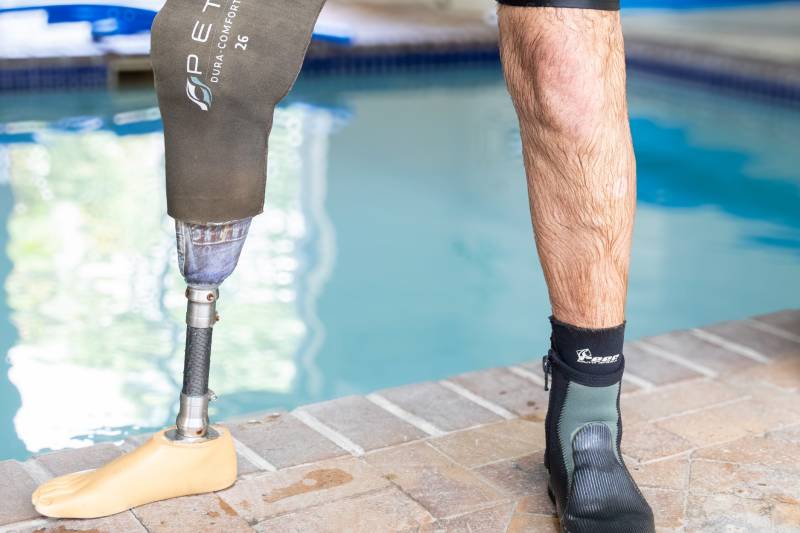
A Silicone Prosthetic Liner provides amputees with comfort, protection, and stability. This specialised gel sock, crafted from medical-grade silicone, is designed to fit snugly over the residual limb before the application of a prosthetic leg. Its primary functions include cushioning the limb to prevent injury, absorbing shock, and creating a secure vacuum suspension that ensures the prosthetic stays firmly in place.
By replacing outdated methods such as knitted stump socks and leather straps, silicone liners have become the global standard since 1995. Their use delivers unparalleled comfort and mobility to amputees. However, in South Africa, the rest of Africa, and many developing regions, this life-enhancing technology remains out of reach for most amputees due to its high cost and limited availability.
The Accessibility Challenge
The limited accessibility of silicone prosthetic liners in Africa stems from several factors:
- Stringent Medical Certification: The complex processes involved in producing medical-grade silicone liners require rigorous certification, restricting the number of global manufacturers.
- High Manufacturing Costs: Most silicone liner manufacturers are based in Europe and North America, where production costs and labour expenses are significantly higher.
- Import Challenges: For African amputees, the cost of imported liners is further inflated by volatile exchange rates and expensive shipping fees.
As a result, only a privileged few—those with significant medical aid or personal wealth—have access to this essential technology, leaving a vast majority of amputees without an effective solution to improve their mobility and quality of life.
PET: Bridging the Gap with Affordable Solutions
Prosthetic Engineering Technologies (PET) is on a mission to transform the lives of amputees by making silicone prosthetic liners affordable and accessible. Established by Luvuyo Sume, an Industrial Engineer and amputee, and Riaan Knight, a leading South African Medical Prosthetist, PET has achieved a groundbreaking feat: the development of a locally manufactured silicone prosthetic liner that meets international standards while being significantly more affordable than imported products.
This innovation is poised to address the needs of thousands of amputees in South Africa and beyond. PET’s silicone liners are:
- Cost-Effective: Produced locally to eliminate importation costs, making them accessible to amputees in low-resource settings.
- High-Quality: Comparable to the best international products in terms of durability, comfort, and functionality.
- Tailored for African Conditions: Designed with the unique challenges of the African environment in mind, ensuring reliability even in rural and rugged terrains.
A Vision for Inclusivity and Global Impact
PET’s locally manufactured silicone liners have the potential to revolutionise prosthetic care for amputees in South Africa and other developing regions. By making this essential technology available to government healthcare programmes, PET aims to empower underserved amputees with improved mobility and quality of life.
Beyond South Africa, the innovation holds promise for global impact. PET is exploring export opportunities to extend the benefits of its cost-effective prosthetic liners to amputees in other low- and middle-income countries.
A Collaborative Effort in Innovation
The success of PET’s locally manufactured silicone prosthetic liner would not have been possible without the invaluable support of key partners:
- Propella Business Incubator
- SAB Foundation
- Technology Innovation Agency (TIA)
- Medical Device & Diagnostic Innovation Cluster (MeDDIC)
- Council for Scientific and Industrial Research (CSIR)
Their contributions to research, development, and equipment provision have been instrumental in realising PET’s vision.
The Future of Prosthetic Care in Africa
PET’s innovative approach represents more than just a product; it symbolises hope for amputees who have been excluded from life-changing technology due to cost barriers. By addressing the unique needs of African amputees with affordable, high-quality solutions, PET is not only improving mobility but also restoring dignity and independence. Together, we can build a future where mobility is a right, not a privilege.